Healium and Tripp are two immersive wellness platforms using virtual reality to help users manage mental health, stress, and emotional well-being. While both use VR technology as a vehicle for delivering their experiences, they differ in their scientific foundations, biometric integrations, and target use cases.
This article compares Healium and Tripp side-by-side to help organizations, especially therapists, schools, veterans’ organizations, hospitals, and researchers, determine which solution best fits their clinical or institutional needs.
.jpg?width=1919&height=1075&name=Healium%20vs.%20images%20(3).jpg)
Healium vs Tripp At A Glance
|
Category |
Healium |
Tripp |
|
Target Markets |
Therapists, clinics, schools, hospitals, VA programs, pain clinics, researchers, and other wellness professionals |
Individual Consumers, Wellness Centers, Enterprise HR/Well-being Programs |
|
Core Technology |
VR meditation visualized by the user's real-time biofeedback (using EEG headbands, and smart watches for heart rate) and mobile companion app |
VR, Mobile App, Guided Meditation, Spatial Audio |
|
Content Focus |
Stress, anxiety, positivity, focus, mindfulness, and sleep. |
Mindfulness, Mood Elevation, Psychedelic Wellness, Resilience |
|
Biofeedback Integration |
✓ Variety of wearables (including EEG and heart-rate feedback visualized in real time) |
❌ No native biometric input integration |
|
Pricing / Access Model |
Subscription-based with clinician, research and institution packages. |
Consumer subscriptions (monthly/yearly), wellness partnerships |
|
Clinical Validation / Research Backing |
Backed by numerous peer-reviewed journals and published studies on stress and anxiety reduction, sleep, mood, and resilience improvement. FDA Registered as a Class II 510(k)-exempt biofeedback medical device. |
Emerging research supports efficacy for mood and anxiety |
|
Device Compatibility |
Compatible devices include VR goggles such as Meta Quest, Pico, and Apple Vision Pro + popular wearables (like Apple Watch, Samsung watch, Muse 2, Brainlink Lite EEG headbands) plus a mobile companion app is available for Android and Apple IOS. |
VR (Meta Quest), Mobile (iOS/Android) |
|
Unique Differentiator |
Real-time biofeedback training from a variety of wearables + new beautiful, immersive, award-winning content every 60 days. |
Psychedelic-inspired visuals and gamified mindfulness in VR |
About Healium
Healium is a clinically evaluated, biofeedback-driven VR platform designed to reduce stress, improve focus, sleep, and enhance emotional well-being through immersive virtual experiences. Built specifically for enterprise environments, including therapists, schools, VA hospitals, clinical researchers, and corporate wellness teams, Healium combines beautiful, serene, neuroscience-backed content with real-time biometric feedback and breath pacing to create responsive, data-informed mental wellness sessions where you can see your feelings.
Using devices like EEG headbands or smartwatches, Healium dynamically adapts visual feedback based on the user’s brainwaves or heart rate, transforming inner states like calmness or focus into interactive visuals. Its scalable group management tools, progress dashboards, and HIPAA-ready design make it a strong fit for organizations and clinics that need measurable, repeatable mental health interventions.
Learn more about Healium’s enterprise solutions
About Tripp
Tripp is a wellness and mindfulness platform that uses VR and mobile technologies to deliver mood-boosting, meditative experiences. Designed primarily for individual consumers and wellness-focused enterprises, Tripp uses spatialized music, breath pacing, and immersive visual environments to guide users into more focused, relaxed, or elevated emotional states.
Available on mobile and VR headsets like Meta Quest, Tripp offers gamified meditation journeys that have been studied for their impact on anxiety and emotional resilience. While it lacks native biofeedback integration, its abstract psychedelic and accessible experience design make it attractive for individuals and organizations focused on self-guided stress relief or daily mindfulness routines without requiring clinical oversight.
Key Differences Between Healium and Tripp
Use Cases & Target Audience
-
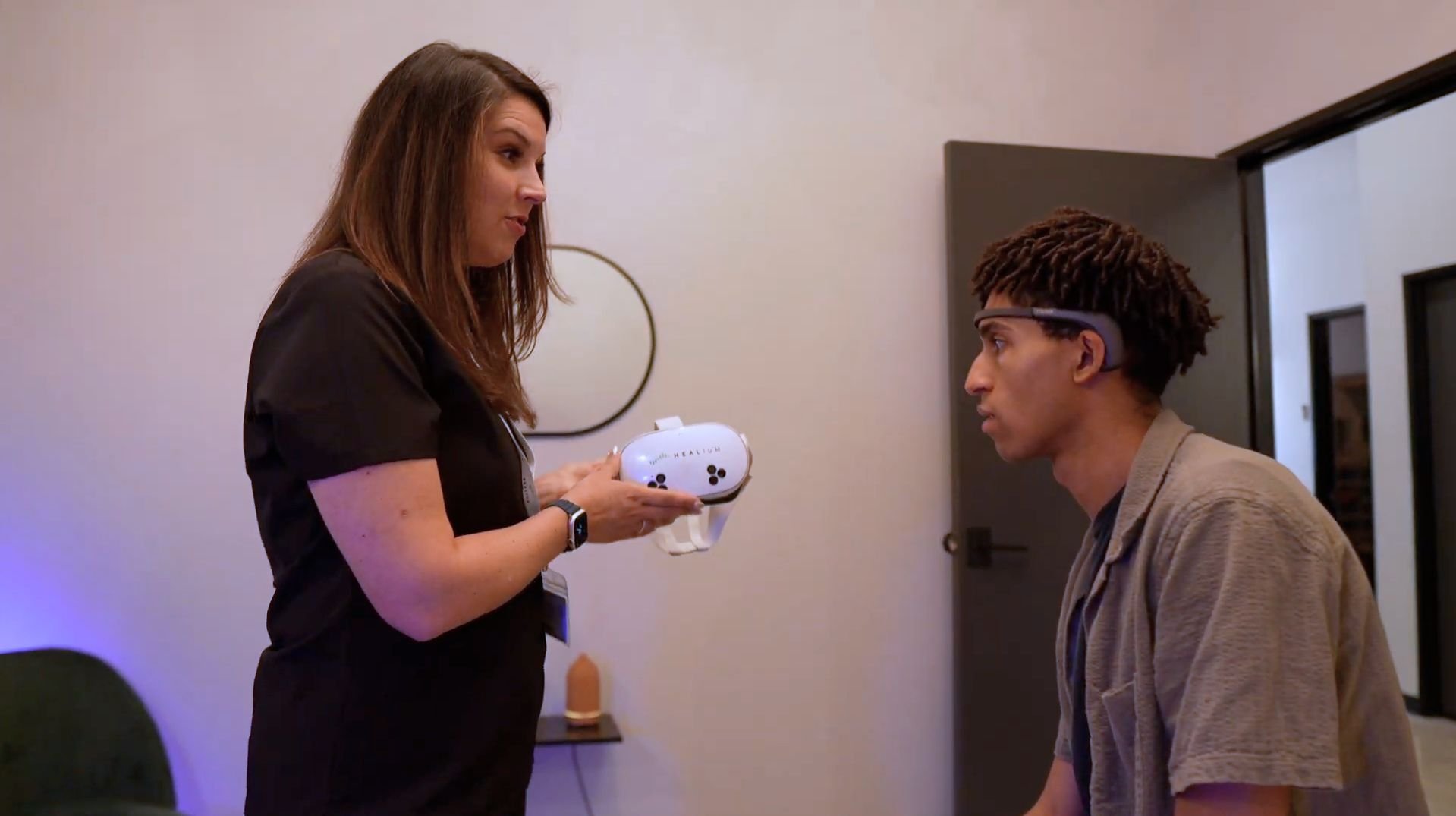
Healium is purpose-built for enterprises, clinical, educational, and research environments, supporting therapists, clinics, schools, and VA hospitals. Therapists rely on Healium to help their clients with stress management, trauma recovery, sleep, and resilience training. Its use cases include stress management, trauma recovery, sleep improvement, and resilience training, all framed within group or institutional contexts.
-
Tripp, by contrast, targets individual consumers, wellness seekers, and some workplace mindfulness programs. It is primarily used for daily mood enhancement, mindfulness, and meditation rather than structured outcomes tracking.
Technology & Devices
-
Healium leverages virtual reality with EEG headbands and smart watches to create biofeedback-responsive, beautiful experiences. These stories adapt in real time based on a user’s physiological state, allowing for a personalized and scientifically grounded approach to mental health.
-
Tripp focuses on VR and mobile app experiences using visuals, soundscapes, and gamified breathwork, but does not support real-time biometric inputs. It runs on VR headsets like Meta Quest and smartphones but doesn’t dynamically respond to the user’s inner state.
Evidence & Validation
-
Healium is backed by numerous peer-reviewed journal publications, supporting its efficacy in reducing anxiety, improving sleep, and increasing focus. Its ability to visualize and track biometric improvements adds a layer of measurable progress and accountability for clinicians and researchers.
-
Tripp has emerging academic support, with initial studies suggesting positive effects on mood, anxiety, and emotional regulation. However, it currently lacks the depth of physiological tracking and published clinical trials that characterize Healium’s approach.
Enterprise Scalability
-
Healium was designed with enterprise deployment in mind. It includes multi-user management, team onboarding and training tools, and HIPAA-compliant data tracking. It’s ideal for institutions needing to deploy mental wellness tools at scale with outcome tracking.
-
Tripp is primarily designed for individual use, though it does offer wellness partnerships for enterprises. It does not currently include features like group user management, therapist dashboards, or compliance tools for sensitive environments.
Pricing & Accessibility
-
Healium offers a subscription-based model for organizations and clinics, with pricing based on VR goggle count. EEG and heart rate sensors can be bundled together with Healium software as a complete kit to enable full access to biometric integrations.
-
Tripp is priced as a consumer subscription service (monthly or yearly) and is available through app stores and VR marketplaces. It’s designed to be highly accessible for individual users, though additional configuration options would be needed to support regulated or high-accountability settings.
Which Is Best for You?
Both Healium and Tripp offer immersive, visually rich experiences for mental wellness, but they serve very different populations. Tripp is ideal for individuals seeking mood enhancement and guided mindfulness in a personal or casual setting.
Healium, on the other hand, is built specifically for organizations and clinics that need scalable, clinically evaluated VR solutions complete with biometric integration, outcome tracking, and enterprise-ready infrastructure. For therapists, clinics, schools, hospitals, VAs, and researchers, Healium is the more robust and adaptable platform.
Learn More About Healium
Looking for a Tripp alternative that’s tailored to clinical or institutional environments? Healium offers a research-backed, biometric-powered platform that adapts to the needs of mental health professionals, educators, and healthcare teams.
Explore Healium for enterprise and discover how you can bring scalable, measurable, and visualized VR mental wellness into your organization.